What is Expense Ratio in a Mutual Fund?
Mutual funds offer a convenient way to pool your money with other investors, providing a diversified portfolio managed by professionals. But, like any financial product, mutual funds come with their costs. One of the key fees you’ll encounter when investing in mutual funds is the expense ratio.
But what exactly is the expense ratio, and why is it crucial?
What is the Expense Ratio?
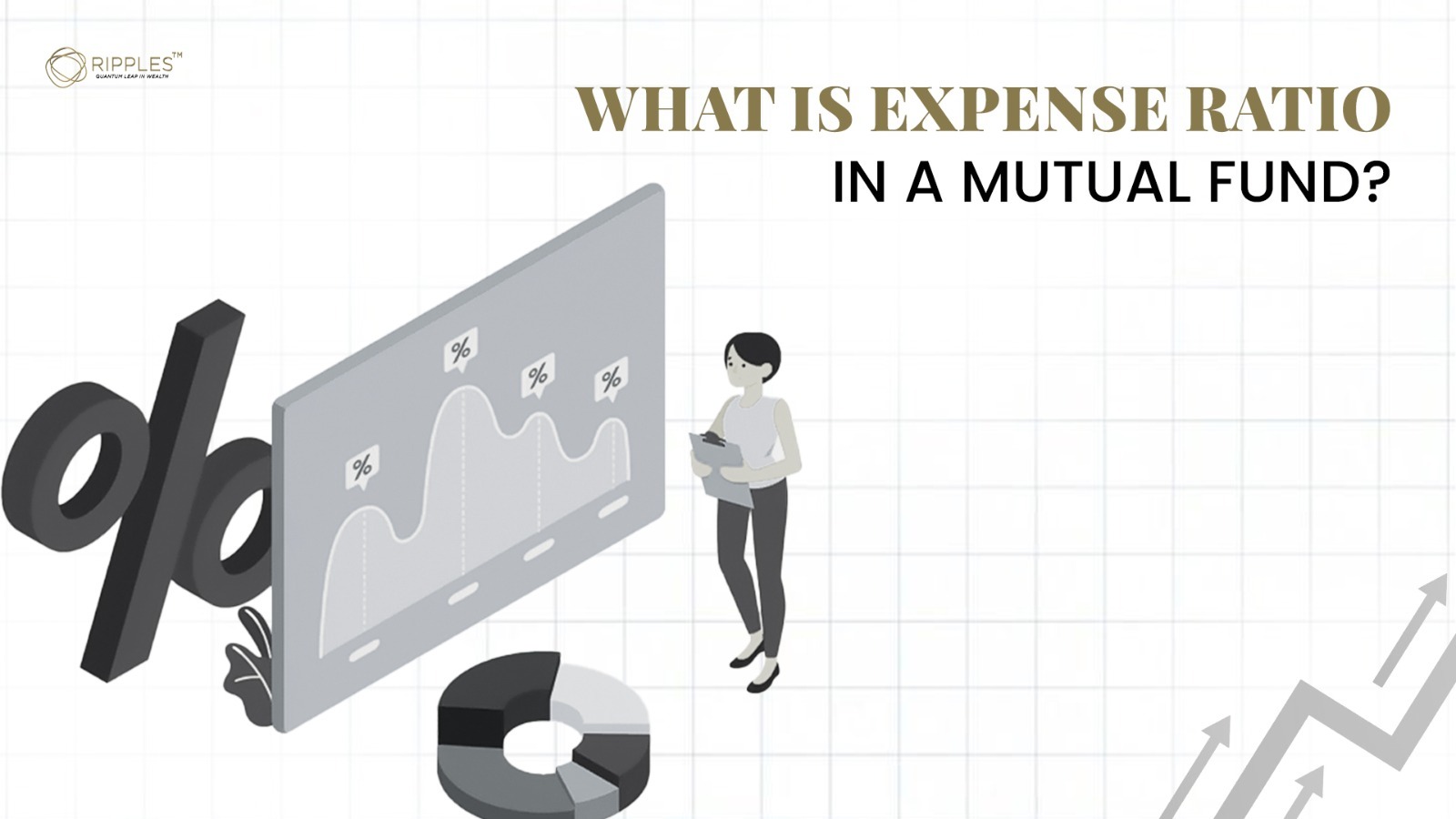
The expense ratio in mutual fund refers to the annual fee that all fund shareholders pay for the management and operation of the fund. This fee is calculated as a percentage of the fund’s average assets under management (AUM). It includes things like:
- Management fees
- Administrative costs
- Marketing fees (12b-1 fees)
- Operating expenses
Essentially, the expense ratio gives you a snapshot of what you’re paying to have professionals manage your investment.
Why the Expense Ratio Matters
Imagine you’re investing in a mutual fund with an expense ratio of 2%. That means 2% of your investment is going towards covering the operational costs, including management and other fund-related fees. Over time, this may seem like a small number, but it adds up.
Let’s say you're taking a 5-year trip with ₹1,00,000 invested in a mutual fund with an expense ratio of 2%. Below is an illustration showing how your ₹1,00,000 grows after a 4% annual return each year, with the expense ratio deducted.
Assumptions:
- Initial Investment: ₹1,00,000
- Expense Ratio: 2%
- Annual Return: 4%
- Duration: 5 years
Year | Starting Balance | Annual Return (4%) | Expense (2%) | Ending Balance |
0 | ₹1,00,000 | ₹4,000 | ₹2,000 | ₹1,02,000 |
1 | ₹1,02,000 | ₹4,080 | ₹2,040 | ₹1,04,040 |
2 | ₹1,04,040 | ₹4,161.60 | ₹2,080.80 | ₹1,06,120.80 |
3 | ₹1,06,120.80 | ₹4,244.83 | ₹2,122.42 | ₹1,08,243.22 |
4 | ₹1,08,243.22 | ₹4,329.73 | ₹2,164.64 | ₹1,10,408.31 |
5 | ₹1,10,408.31 | ₹4,416.33 | ₹2,208.17 | ₹1,12,616.47 |
As shown in the example, even though you’re earning a 4% return, the 2% expense ratio means that at the end of 5 years, your ₹1,00,000 has grown to ₹1,12,616.47 instead of ₹1,216,000 (which would have been your balance without any expenses). The expense ratio is slowly eroding your potential returns over time.
While it might seem small at first, over the long run, it adds up and significantly affects your wealth accumulation.
How Expense Ratio Affects Your Investment
While expense ratios vary depending on the fund, actively managed funds tend to have higher expense ratios compared to index funds or exchange-traded funds (ETFs). Why? Active managers are paid to pick stocks, bonds, and other investments with the goal of outperforming the market, while index funds simply track a specific index, which requires less management.
But does that mean an actively managed fund isn’t worth the cost? Not necessarily. If the active fund manager consistently outperforms the market and justifies their higher fees, the higher expense ratio could be worthwhile.
Example: If a fund charges a 1% fee, but over the long-term, the fund consistently outperforms its benchmark by 3%, the higher fee is likely justified because your overall returns are still strong.
How to Compare Expense Ratios Across Funds
When comparing mutual funds, it’s important to look at the expense ratio as part of the overall picture. A low expense ratio means that more of your money is working for you rather than going to management fees. But don’t just settle for the lowest fee possible. A low-cost fund is only valuable if it’s delivering solid returns over time.
Key things to consider:
- Look at funds with historical performance that matches your financial goals.
- Compare expense ratios across similar funds (active vs. passive) to ensure you’re getting value.
- Read the fine print: Sometimes, lower expense ratios may be part of a gimmick, and the fund could have hidden costs elsewhere.
How to Reduce the Impact of High Expense Ratios
If you find that you’re paying a high expense ratio, there are ways to minimize its impact:
- Diversify your portfolio: Don’t put all your money into one high-fee fund. Spread it across low-cost index funds or ETFs.
- Review fund performance regularly: Keep track of whether the fund’s performance justifies its fee. If it doesn’t, it might be time to switch.
- Consider tax-efficient funds: Some mutual funds are designed to be more tax-efficient, reducing the overall cost of investing.
Conclusion
The expense ratio is a critical factor when choosing a mutual fund. While higher expense ratios often indicate actively managed funds, they’re not always the best option if they eat your returns. Always weigh the cost against the potential return, and make sure you’re getting the most value for your investment.
If you’re looking to maximize your returns, consider funds with lower expense ratios or balance your portfolio with a mix of low-cost index funds and higher-cost active funds. Whatever approach you choose, the key is understanding how the expense ratio impacts your bottom line and choosing the fund that fits your long-term financial goals.
FAQs
What Happens When You Don’t Withdraw Mutual Funds in Time?
If you don't withdraw your mutual funds in time, you risk missing out on potential opportunities or incurring losses when the market moves unfavorably. The fund value may continue to fluctuate based on market conditions, and you could be stuck in a losing position. However, if you're invested for the long-term, staying invested might allow your funds to recover and grow over time. Timing matters, but it's best to align your withdrawals with your investment goals.
What Happens to Mutual Funds During Market Crashes?
During market crashes, mutual funds typically experience a decline in value due to the drop in the underlying assets (stocks, bonds, etc.) they hold. Actively managed funds may struggle to protect against large losses, while passively managed funds, such as index funds, may also reflect the overall market decline. However, long-term investors may benefit from market recoveries post-crash, as markets historically tend to bounce back. It's crucial to assess your risk tolerance and investment horizon before making decisions during downturns.
Are index funds better than actively managed funds in terms of expense ratios?
Yes, index funds generally have lower expense ratios compared to actively managed funds because they track an index passively, requiring less management.
Do expense ratio change over time?
Yes, expense ratios can change over time, so it’s important to review your mutual fund’s prospectus regularly to stay updated on fees.