What Actually Matters When Choosing Mutual Funds
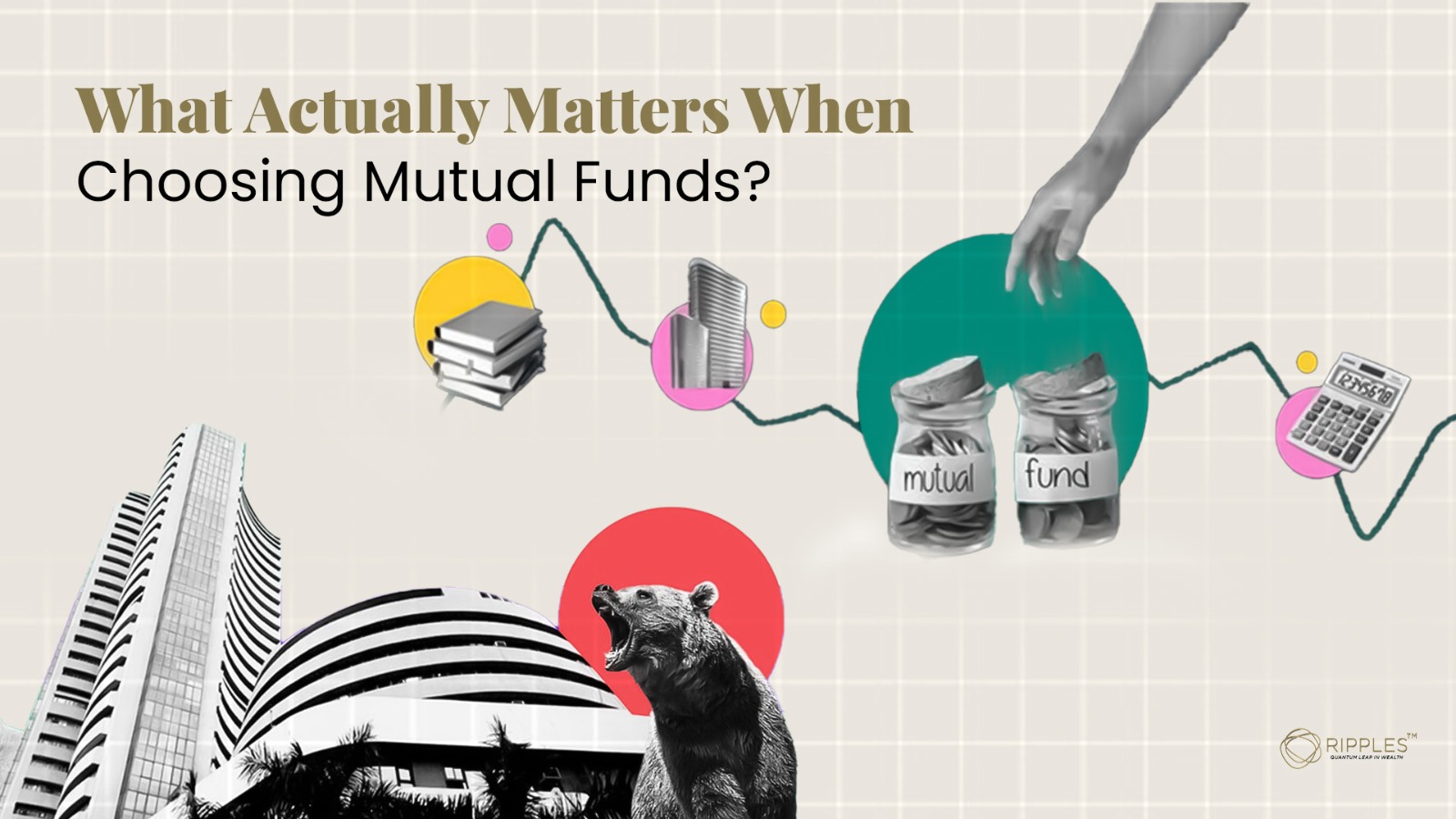
Mutual funds have been a popular choice for investors looking to diversify their portfolios, whether they’re seasoned pros or just starting their investment journey. But with so many options available, how do you decide which mutual fund is the best fit for you?
Choosing the right mutual fund isn’t a one-size-fits-all decision. It’s about aligning your investment with your financial goals, risk appetite, and investment horizon. We’ll break down the key factors you should consider when choosing mutual funds, helping you make an informed decision that suits your needs.
What Are Mutual Funds?
At its core, a mutual fund pools money from multiple investors to purchase a diversified portfolio of assets like stocks, bonds, or other securities. The value of the fund is based on the performance of these assets. Think of a mutual fund as a basket of investments managed by a professional fund manager. There are several types of mutual funds, each designed for different goals and risk profiles.
Know more about: Mutual Funds
Factors to Consider When Choosing Mutual Funds
1. Investment Goals and Risk Tolerance
- Every investor has different goals. Some may be looking for short-term gains, while others may want to grow their wealth over decades. Your investment goal is the starting point. If you're looking to build wealth for retirement, equity mutual funds may be suitable. However, if you prefer stability and less risk, debt funds might be a better fit.
- Risk tolerance is key. Do you prefer the thrill of high returns (with higher risk), or are you more comfortable with steady, lower-risk investments? Understanding your risk profile will guide you in choosing the right mutual fund.
2. Fund’s Past Performance
- While past performance isn’t a guarantee of future results, it can offer valuable insights into how the fund has weathered different market conditions. A consistent performer can indicate a well-managed fund.
- But beware, don’t get overly enamored with funds that have delivered stellar returns in the past. The market changes, and the performance of funds.
3. Expense Ratios and Fees
- All mutual funds come with fees, but you’ll want to be mindful of the expense ratio. This is the annual fee charged to manage the fund, usually expressed as a percentage of your investment.
- Lower fees are generally better because they eat into your returns over time. However, a fund with slightly higher fees might still be worth it if it consistently outperforms its peers.
4. Fund Manager’s Track Record
- A fund manager’s experience and expertise are crucial. A seasoned manager brings valuable insight and decision-making capabilities that can help the fund navigate various market cycles. Research the fund manager’s previous track record and reputation.
5. Asset Allocation
- Asset allocation refers to how a fund divides its investments among different asset classes, such as equity, bonds, cash, etc. It’s important because it directly affects the fund’s risk and return potential. A diversified fund is less likely to be severely impacted by the poor performance of one asset class.
6. Fund Size
- The size of a mutual fund can tell you a lot about its market presence. A larger fund can have advantages, such as economies of scale and better liquidity. However, very large funds may have difficulty generating high returns, as they have to deploy a significant amount of capital.
- On the other hand, smaller funds might have higher growth potential but can also be riskier due to their relatively smaller market impact.
Understanding Different Types of Mutual Funds
Type of Mutual Fund | Description | Best For |
Equity Funds | Invests primarily in stocks, offering high returns but with higher risk. | Investors seeking long-term growth and who can handle market volatility. |
Debt Funds | Invests in bonds or other fixed-income securities, providing stable and predictable returns. | Conservative investors looking for regular income with lower risk. |
Hybrid Funds | A mix of both equity and debt, balancing high returns with stability. | Investors want a balanced approach to risk and return. |
Index Funds & ETFs | Tracks a market index (e.g., S&P 500), low-cost, passively managed funds. | Investors looking for broad market exposure with minimal management fees. |
How to Analyze a Mutual Fund
Metric | Description | Why It Matters |
NAV (Net Asset Value) | The price at which shares of the fund are bought or sold. It’s the value of one unit of the fund. | NAV helps you understand the current value of the fund and track its performance over time. |
Volatility | Measures how much the fund's returns fluctuate over time. High volatility means higher risk but potentially higher rewards. | If you are a risk-averse investor, you may want to avoid highly volatile funds. On the other hand, risk-seeking investors may benefit from the potential returns. |
Alpha | A performance measure that compares the fund's return to its benchmark index. Positive alpha indicates outperformance, while negative alpha indicates underperformance. | A positive alpha suggests the fund is doing better than its benchmark, while a negative alpha means it’s lagging behind. |
Expense Ratio | The annual fee charged by the fund for managing its investments is typically expressed as a percentage of assets under management (AUM). | High fees can eat into your returns over time. Low-cost funds typically perform better in the long run, all else being equal. |
Sharpe Ratio | A measure of risk-adjusted return, which compares the fund's excess return to its standard deviation (volatility). | A higher Sharpe ratio indicates that the fund has delivered better returns for the amount of risk taken. |
Fund Manager's Experience | The track record and experience of the fund manager in managing the fund. | A skilled and experienced manager is more likely to make informed decisions and manage risks effectively. |
Fund Size | Refers to the total assets under management (AUM) in the fund. Larger funds may benefit from economies of scale. | Larger funds are often more stable and liquid, but they may have a harder time achieving high growth compared to smaller funds. |
Turnover Ratio | Measures how often the fund's portfolio changes in a year. A high turnover ratio means the fund is frequently buying and selling securities. | A high turnover ratio may lead to higher transaction costs and tax implications. It’s also an indicator of how actively the fund is managed. |
Dividend Yield | The income (usually in the form of dividends) the fund generates relative to its price. | For income-focused investors, a higher dividend yield can provide regular income. However, it's important to evaluate whether the yield is sustainable. |
Risk-Return Profile | Assesses the overall risk (volatility) of the fund in relation to its expected returns. | Understanding the risk-return tradeoff helps you determine if a fund fits your investment profile and goals. |
Mistakes to Avoid while Investing
- Relying Only on Past Performance: As mentioned, past returns don’t guarantee future success. Always look at other factors, such as the fund manager’s track record and current market conditions.
- Ignoring Fees: Overlooking the expense ratio can eat into your returns. Always check the fund's fees before investing.
- Lack of Diversification: Don’t put all your eggs in one basket. Ensure your portfolio is well-diversified across various mutual funds to reduce risk.
Conclusion
Choosing the right mutual fund takes time, research, and careful consideration of your financial goals. Whether you're looking for long-term growth, steady income, or a balanced approach, understanding the factors that matter most will put you on the right path. Remember, the key to successful investing is not just about picking the right fund but also sticking to your plan over time.