Mutual Fund Terms Explained: A Simple Glossary
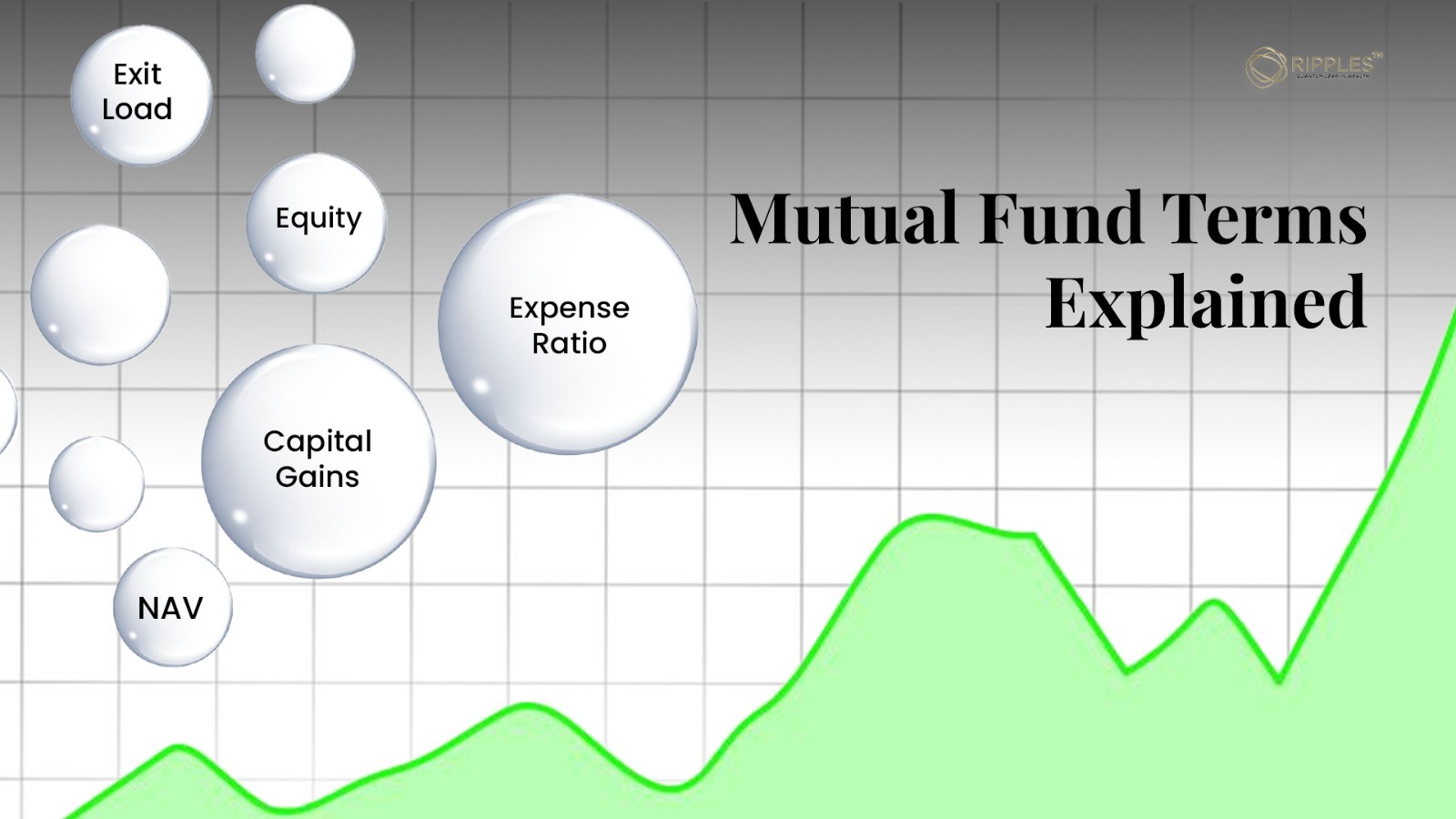
Investing in mutual funds can be a powerful way to grow your wealth, but for beginners, it can feel overwhelming due to the complex financial jargon. Understanding the basic terms used in the world of mutual funds is essential for making informed decisions.
Why is understanding mutual fund terms important?
Mutual funds are a great way to pool your money with other investors and let professionals manage your investments. But to truly make the most of your mutual fund investments, you need to understand the terms commonly used in this field. By understanding these terms, you can make more informed decisions about where to invest and how to manage your portfolio.
Terms Every Investor Should Know
1. Net Asset Value (NAV)
The Net Asset Value (NAV) is the price of one unit of a mutual fund at the end of each trading day. It’s calculated by dividing the total value of the fund's assets (stocks, bonds, etc.) by the total number of outstanding units. NAV is an essential metric because it shows the value of your investment in the fund.
2. Expense Ratio
The expense ratio is the annual fee charged by the fund manager for managing the mutual fund. It’s usually expressed as a percentage of the fund's average assets under management (AUM). A lower expense ratio means lower costs, which can lead to higher net returns over time.
3. Systematic Investment Plan (SIP)
A Systematic Investment Plan (SIP) is a disciplined way to invest in mutual funds. You contribute a fixed amount regularly (monthly or quarterly) to buy units of the fund. This approach averages out the cost of investment over time, reducing the impact of market volatility.
4. Asset Allocation
Asset allocation is the process of dividing your investments among different asset classes, such as equities, bonds, or cash. Proper asset allocation helps balance risk and return based on your investment goals and time horizon.
5. Equity vs. Debt Funds
- Equity Funds: These funds invest primarily in stocks. They are considered high-risk, high-reward investments and are suitable for long-term investors willing to take on more risk.
- Debt Funds: These funds invest in bonds and other debt instruments. They are lower-risk and generally offer more stable returns, making them ideal for conservative investors looking for regular income.
6. Index Funds
An Index Fund is a type of mutual fund that seeks to replicate the performance of a specific market index, like the Nifty 50 or the S&P 500. These funds are passively managed, meaning they typically have lower fees than actively managed funds.
7. Capital Gains
Capital gains refer to the profit made from selling an investment for more than its original cost. In mutual funds, capital gains can be either short-term (if the investment is held for less than a year) or long-term (if held for over a year). The tax rates on capital gains depend on the duration for which the investment was held.
8. Assets Under Management (AUM)
AUM represents the total market value of the assets that a mutual fund manages on behalf of its investors. It’s a good indicator of the fund’s size, popularity, and stability. Generally, the higher the AUM, the more diversified the fund is.
9. Alpha and Beta
- Alpha is a measure of a fund's performance relative to a benchmark index. A positive alpha indicates that the fund has outperformed the benchmark, while a negative alpha indicates underperformance.
- Beta measures the volatility of a fund in relation to the overall market. A beta of 1 means the fund's price moves in line with the market, while a beta less than 1 indicates lower volatility.
10. Exit Load
The exit load is a fee charged by the fund when you withdraw your investments before a specified period. It discourages short-term trading and helps long-term investors.
11. Risk-adjusted Return
Risk-adjusted return helps evaluate the return on an investment considering the risk involved. It’s important because a high return is less valuable if the investment carries too much risk. Common risk-adjusted return metrics include the Sharpe ratio and the Sortino ratio.
12. Average Credit Quality
Average Credit Quality refers to the average credit rating of the securities (like bonds) held in a mutual fund’s portfolio. A higher credit quality typically indicates lower risk, while lower credit quality can indicate higher risk, with the potential for higher returns. Funds with a higher average credit quality are generally safer but may offer lower returns.
13. Balanced Funds
Balanced Funds are mutual funds that invest in a mix of equities (stocks) and fixed-income securities (bonds). The goal is to provide both capital growth (from equities) and income (from bonds). Balanced funds are considered less volatile than pure equity funds but can provide more growth potential than bond-only funds.
14. Benchmark
A Benchmark is a standard index (such as the Nifty 50 or S&P 500) that represents the performance of a specific market or asset class. Mutual fund managers compare the performance of their fund against a benchmark to evaluate the fund’s performance.
15. Bond
A Bond is a debt security, where an investor lends money to an entity (such as a government or corporation) for a defined period at a fixed interest rate. In return, the entity promises to repay the principal amount along with periodic interest (coupon payments).
16. Broker
A Broker is a financial intermediary who buys and sells securities (stocks, bonds, mutual funds) on behalf of clients. Brokers charge a commission or fee for their services.
17. Brokerage
Brokerage is the fee charged by a broker for executing transactions on behalf of a client. It can be a flat fee or a percentage of the transaction value.
18. Bull Market
A Bull Market refers to a period in which asset prices, particularly stocks, are rising or expected to rise. It is characterized by investor optimism, confidence, and expectations that strong performance will continue.
19. Close-Ended Schemes
Close-Ended Schemes are mutual funds that have a fixed number of units and are listed on stock exchanges. Investors can buy and sell the units only during the trading hours of the stock market or through the fund’s offer period. These schemes do not allow you to redeem or purchase units after the initial offer.
20. Coupon Rate
The Coupon Rate is the fixed interest rate paid by a bond issuer to bondholders, typically expressed as a percentage of the bond’s face value. It’s the annual return that the investor will receive until the bond matures.
21. Debt/Income Funds
Debt/Income Funds are mutual funds that primarily invest in fixed-income securities like bonds, government securities, and other debt instruments. They are designed to provide a steady income to investors with lower risk than equity funds.
22. Discount
In the context of mutual funds, Discount typically refers to the difference between the market price of a closed-end fund and its Net Asset Value (NAV). If the market price is lower than the NAV, the fund is said to be trading at a discount.
23. Dividend Per Unit (DPU)
Dividend Per Unit (DPU) is the amount of money paid out to the unit holders of a mutual fund as a dividend. It is calculated by dividing the total dividend declared by the number of units in circulation.
24. Face Value
Face Value is the original value of a security (such as a bond or share) as stated by the issuer. It’s the amount the investor will receive upon maturity (for bonds) or the price at which shares are issued. For stocks, face value is largely symbolic and has little impact on market pricing.
25. Gilt Funds
Gilt Funds are mutual funds that invest primarily in government securities (gilts), such as bonds issued by the central or state governments. These funds are considered low-risk, as they are backed by the government, but the returns may be lower compared to other investments.
26. Gilts/Government Securities
Gilts or Government Securities are debt instruments issued by the government to raise funds. These are considered the safest investment options because they are backed by the government. They include Treasury bills, government bonds, and savings bonds.
27. Guaranteed Returns
Guaranteed Returns refers to a fixed return offered by an investment product, usually from insurance or fixed deposit schemes, where the investor is assured of receiving a specific rate of return on their investment. Mutual funds typically do not offer guaranteed returns, as market performance dictates the returns.
28. Inflation Risk
Inflation Risk refers to the potential risk that inflation will erode the purchasing power of the returns on an investment. If inflation outpaces the rate of return on an investment, the real value (purchasing power) of the returns decreases.
29. Credit Risk
Credit Risk is the risk that an issuer of a bond or other debt instrument will default on its payments. If a bond issuer fails to meet its interest or principal obligations, the investor may lose money.
30. Direct Plans
Direct Plans are mutual fund plans where you invest directly with the fund house without going through a distributor or broker. These plans generally have lower expense ratios as there are no intermediary commissions involved.
31. Systematic Transfer Plan (STP)
A Systematic Transfer Plan (STP) allows investors to transfer a fixed amount from one mutual fund scheme to another, typically from a more volatile equity fund to a safer debt fund, at regular intervals. This is a strategy to reduce risk while continuing to invest.
How These Terms Impact Your Investments
Understanding these terms helps you evaluate different mutual funds and choose the ones that fit your financial goals and risk tolerance. For example, if you’re looking for high returns and are willing to take on risk, you might prefer equity funds with higher beta and positive alpha. On the other hand, if you’re seeking more stability, debt funds with a lower expense ratio might be better suited for you.
Conclusion
Now that you have a clear understanding of key mutual fund terms, you’re better equipped to start your investment journey. Whether you're just beginning or looking to refine your strategy, knowing these terms is the first step toward making smarter investment decisions.
Start researching the different types of funds and see which ones align with your goals. The more you learn about these terms, the better you’ll be at managing your investments.
Start investing in a mutual fund with ripples
FAQs
How is NAV calculated?
NAV is calculated by dividing the total value of the fund’s assets by the number of outstanding units.
What is an expense ratio?
It’s the fee charged by the fund manager for managing the mutual fund, expressed as a percentage of AUM.3. What’s the difference between equity and debt funds?Equity funds invest in stocks and are riskier, while debt funds invest in bonds and are more stable.
What is an exit load?
It’s a fee charged when you redeem your investments before a specified period.